
10 of New Zealand’s Famous ‘Big Things’ | New Zealand
Last updated on 29 December 2024
This post may contain affiliate links. If you make a purchase with one of these links, I recieve a small commission at no additional cost to you. Read the full Affiliate Policy.

Are New Zealand’s Big Things worth the hype?
New Zealand. The home of hobbits, sheep and the occasional Kiwi. In among the raging battles for Middle Earth and the hordes of tourists that flock to our shores (‘flock’…see what I did there?), there are a multitude of ginormous icons scattered around the country in varying degrees of both ‘awesome’, and ‘slightly mad’. All of which, however, are worth a visit. New Zealand’s Big Things are exactly what they sound like: large version so of normal-sized objects and animals.
These are historical monuments that make an appearance on every tourist and local’s Instagram account when they travel around Aotearoa, and it will be like that for a long time coming.
Like America’s road-side attractions or England’s period drama homesteads, New Zealand’s Big Things are iconic. They’re pieces of (albeit quirky) history from this small island nation, and they all tell a story.


1 | Paeroa’s L&P Bottle
‘L&P’ stands for ‘Lemon and Paeroa’ and is New Zealand’s national soft drink. Originally, Lemon and Paeroa was simply mineral water found in a deep spring in Paeroa, with a squeeze of lemon in it for taste. Little did they know back in the early 1900s that ‘L&P’ (originally called ‘Paeroa and Lemon’) would become such a hit, be bottled out by Schweppes in the 1960s and made into one of the most iconic Kiwi items that ever was.
Now, the L&P bottle stands tall in Paeroa, at a great 7 meters high, and 1.3 meters round. It was first built on the edge of State Highway 2, but since then has been relocated back, into Ohinemuri Reserve, so we can stand with our selfie sticks and capture the bottle without disturbing the traffic.
2 | Rakaia’s Salmon
Rakaia: The Salmon Capital of New Zealand. Just 50km south of Christchurch, Canterbury, across the Rakaia River, lies the small fishing town of Rakaia. The road and the bridge you cross to reach the town was built in 1873, and at the time, the bridge was the longest bridge in the Southern Hemisphere, coming in at 1.8km. Now, of course, there are bridges much longer than that, but it’s unlikely that any result in a 12 metre high leaping salmon. While it may be a little obvious, the salmon on the side of the main highway is a symbol for the incredible salmon and trout that is found in the River, and it even has an attraction called Salmon World right next to it.

3 | Tirau’s Corrugated Iron Dog and Sheep
On the main highway between Taupo and Auckland is the tiny blip of a town, whose corrugated iron creations know no bounds. From street signs to shop rooftops to purchasable home-décor designs, the Corrugated Town of New Zealand is the main stop-off for travellers. What makes the town even greater than it is already is, is the two giant corrugated iron buildings in the shape of a dog, and a sheep.
So which came first? The sheep or the dog? The Big Sheep Wool Gallery was there first, selling everything woollen, from souvenirs to sheepskins to slippers. Later, in 1998, the giant dog was created as the Tirau Information Site and public toilets, complete with a neighbouring car park and picnic area. Steven Clothier was the man who created the dog’s head, along with the majority of the other building pieces, sculptures and quirky artworks that can be found around the rural town.
4 | Waitomo’s Big Apple
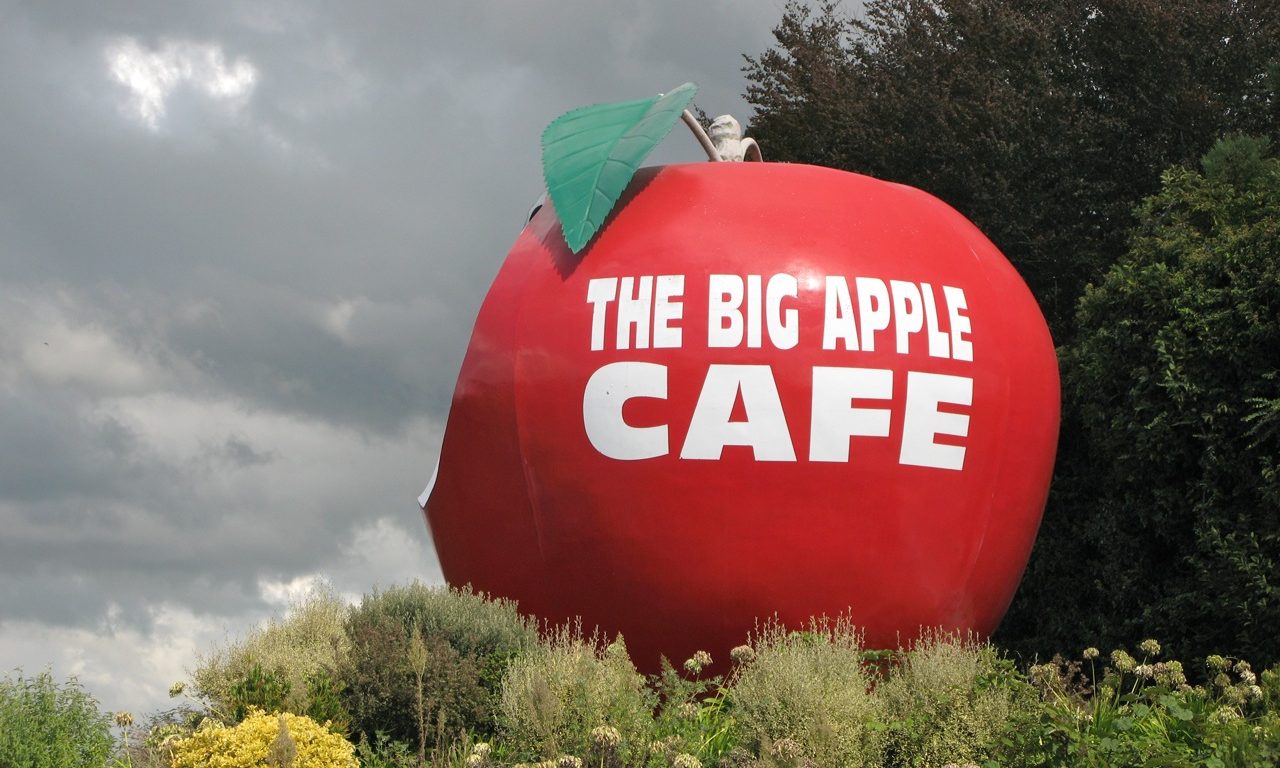
Perhaps not as well known as some of the other large attractions in New Zealand, the Big Apple Café is located at the Waitomo Orchards. Waitomo is a town mostly famous for its glow worm caves, with a never-ending stream of tourists at its doorstep. For people around the area though, the 7.5 metre apple sign is well known and is situated on State Highway 3.
The Big Apple Café changed ownership in 2015, with the new owners hoping to bring in more tourists who are in the area visiting the Waitomo Glow Worm Caves. The restaurant can hold over 400 people, and also has café and tourist facilities. A lot of the food that is served at The Big Apple comes from the orchards, and if the new owners succeed in bringing in more tourists, perhaps the giant apple will become more of Waikato region icon than it already is.


5 | Otorohonga’s Kiwi
Near Waitomo and the Big Apple is a town called Otorohonga, and they pride themselves on Kiwiana (all things kiwi; kiwi icons), and their Sir Edmond Hilary Walkway. At both entrances to this King Country town are corrugated iron kiwis, and no, this isn’t another Tirau in the making. The corrugated iron kiwis have become somewhat of a mascot for Otorohonga, but only after the town adopted the Kiwiana Capital status in the late 1990s.
The Kiwi’s really come from the fact that Otorohonga has a fantastic Kiwi House, pulling in tourists and school trips alike. The Kiwi house was the first place in the world to have a live kiwi on display, and that’s partly why it’s so famous. While the kiwis in Otorohonga aren’t as large as the building corrugated iron sheep and dog in Tirau, they have their own quirkiness about them, and they are definitely something special.
6 | Te Puke’s Slice of Kiwifruit
Ah, the kiwifruit. Perhaps a little known fact (even to New Zealanders) is that the kiwifruit is actually a Chinese Gooseberry, from the Yangtzee Valley in China. Back in 1904, a teacher planted a seed in New Zealand, and the rest, they say, is one of New Zealand’s largest exports. Okay, so perhaps they don’t say that, but it’s true, and the history of the kiwifruit in New Zealand is worth a read. But in the Bay of Plenty region in the North Island of New Zealand, the town of Te Puke was put on the map.
The kiwifruit itself is a well-known kiwi icon, both as a fruit, and also as the giant sign for Kiwi360 in Te Puke. One of the best growing areas in New Zealand for kiwifruit, it’s no wonder the little town jumped on this great opportunity to dub themselves Kiwifruit Capital of the World. Kiwi 360 isn’t only a gigantic slice of kiwifruit, it’s the symbol of the history and the heritage of the land it’s on, as well as a symbol for many attractions that around the Te Puke area. There’s a Horticultural Theme Park with KiwiKart Tours, a café, a shop with kiwifruit products, and even a functions room, all in the shadow of New Zealand’s largest slice of fruit.
7 | Ohakune’s Carrot
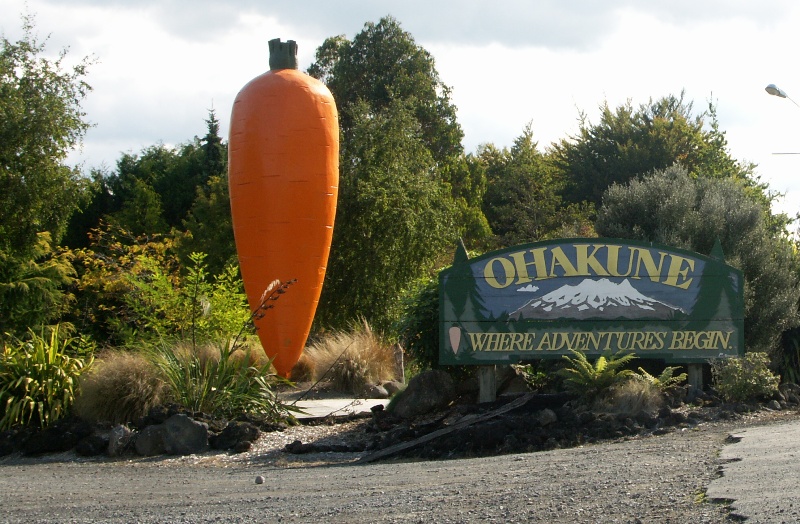
One of the most famous of all New Zealand’s Big Things, is the giant carrot at the bottom of Mount Ruapehu, in the town of Ohakune, in Tongariro National Park. If it’s not the most famous Big Thing, then it’s definitely the most hugged. As tourists flock to the ski fields of the mountains in the Central North Island, Ohakune is a great stopping place, even more so that there’s a giant carrot to take a picture with.
Back in 1925, the first market gardens were grown in Ohakune, and from there the town flourished in vegetable growing. In recognition of the town’s fantastic vegetable growing abilities and the importance of the gardening community to New Zealand, the 7.5-meter giant carrot was erected by the Ohakune Growers Association in 1984. While it was the talk of the town (nay, the country) at the time as people argued over its suitability and possibly ridiculousness, it remains there to this day, and New Zealanders and tourists alike gather around it every single day.
8 | Te Kuiti’s Sheep and Shearer
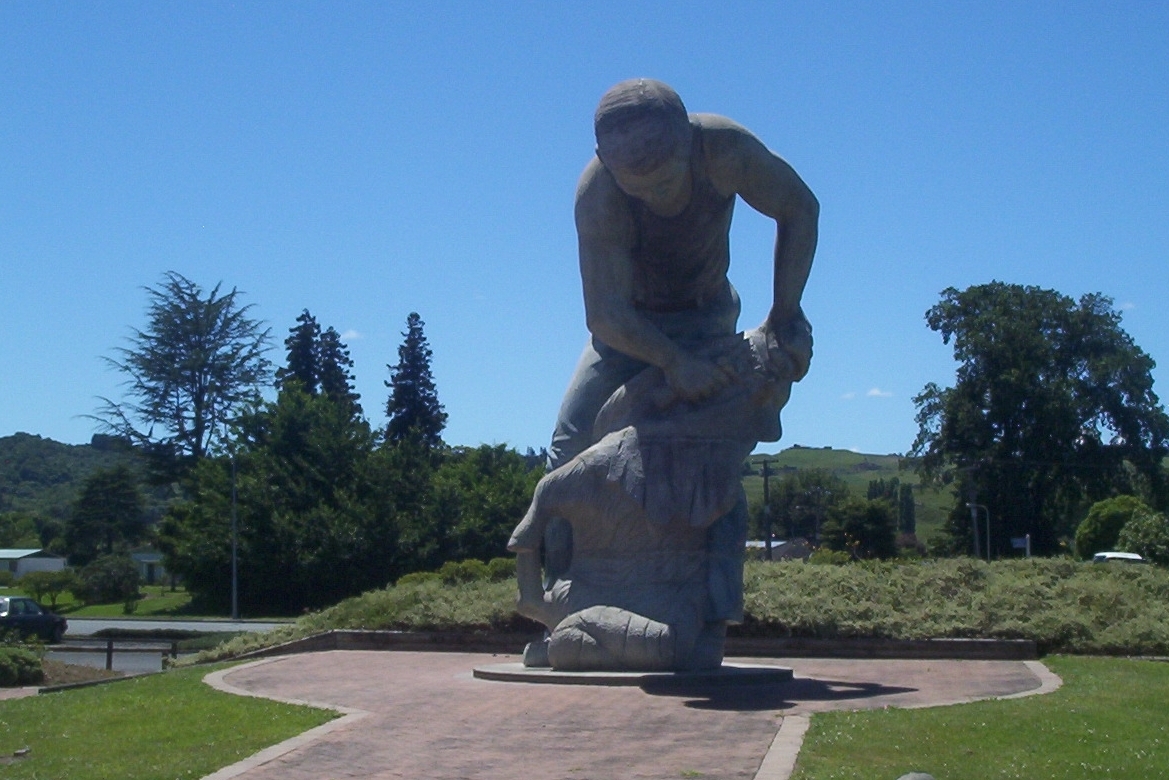
New Zealand: a small little island nation at the bottom of the world. Home to just over 4 million people, and 60 billion sheep. The human-to-sheep ratio is higher than most other countries in the world, and while dairy is a bigger industry nowadays, the town of Te Kuiti has celebrated one of the most famous champions of shearing, David Fagon (soon to become Sir David Fagon), by sporting a 6-meter tall statue of a shearer, in full shearing mode.
Every year in Te Kuiti there are shearing competitions, and even a ‘Running of the Sheep’ event, where about 2000 sheep run down the main street. Only in New Zealand, eh? The sheep and shearer statue, like many of the Big Things of New Zealand, was on a post stamp in New Zealand Post’s town icons series and continues to be a well-loved symbol of the great achievements in shearing that have come out of Te Kuiti.
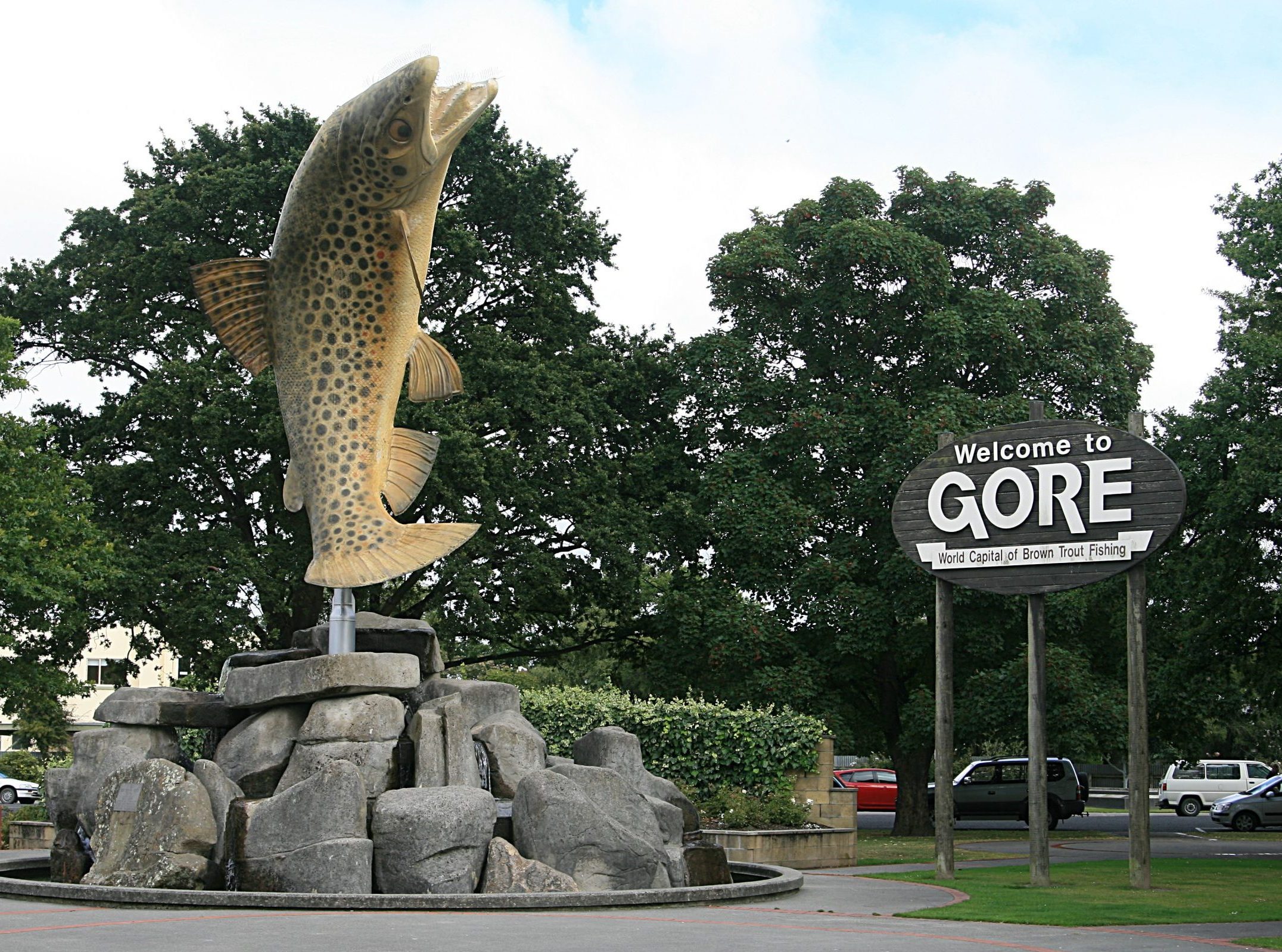


9 | Gore’s Trout
Being one of the southernmost towns in New Zealand, Gore is the official home of New Zealand Country Music. However, perhaps more importantly, it is known for its fantastic fly-fishing. Renowned as the Brown Trout Capital, Gore is on the Mataura River, one of the best trout fishing rivers in the world. It’s no wonder, then, that 7-meter brown trout was erected among a pile of large rocks at the entrance of the town. Proudly situated by the Welcome sign, you can’t miss it as you drive into this Southland fishing-frenzied community.
Much like the giant salmon in Rakaia, Gore’s trout’s meaning cannot fool anyone. It is what it is, and it means what you’d think it should mean: ‘We have trout here. And it’s good trout.’ Nevertheless, as silly as it may be, it is definitely an icon to both the people in Gore and in the wider Southland region.
10 | Taihape’s Gumboot
In case the word ‘gumboot’ is foreign to you, it is just the name given in New Zealand for rubber boots. They are above knee-high and are used by farmers and anyone else who walks through water and mud. Everyone New Zealander has at least one pair, if not two, and everyone has experienced that awful feeling of their socks slipping down inside their boots and not being able to do anything about it.
Taihape, a little town in the centre of the North Island, is (yes, you guessed it) Gumboot Capital of the World. Located right on State Highway 1, it’s on the main route between Taupō and Auckland and prides itself on being a humble but hardworking community – just like gumboot. The corrugated iron gumboot was created after comedian John Clark mentioned Taihape as the Gumboot Capital of the World in one of his skits. That was the beginning of it all.
In an attempt to revitalise the dying town, and picking up on John Clark’s humorous comments, the Gumboot Day Festival was initiated. That was in 1985, and every year since then the festival has run. It’s a day not to be missed, with competitions and championships and a lot of gumboot throwing.
While New Zealand’s Big Things may seem like silly roadside attractions, these and the others, are kiwi icons that we all know and love. With so many dotted around the country, the mind boggles as to what kind of Big Thing they’ll put up next.
How many of New Zealand’s Big Things have you ticked off your list?

Anjali Kay
Anjali Kay is an Aotearoa New Zealand-based blogger and book lover sharing travel inspiration, bookish posts, the occasional creative project, and a lot of practical blogging tips here at This Splendid Shambles. Based in Auckland, she's been writing book reviews and travel posts, sharing creative projects and blogging tips since she started her first blog in 2009. When she's not working on her own blog, Anjali also offers blog coaching and support for bloggers who want real guidance from someone who's actually done the work, and is a few chapters ahead of them.


Having fun? Check out these posts!

We went to the Weber Bros Circus in Auckland

Brick Bay Sculpture Trail | Snells Beach, New Zealand
