
Faceless Marketing and Anonymous Blogging: What’s the deal?
Last updated on 22 May 2024
This post may contain affiliate links. If you make a purchase with one of these links, I recieve a small commission at no additional cost to you. Read the full Affiliate Policy.

If you’ve spent any time on social media in recent months (and I know you have 😉) then you’re probably aware of a new trend: faceless marketing. This comes in the form of faceless Instagram accounts, or faceless TikTok accounts, and even whole courses and resources have been shared on how to start a faceless account – whether that be on social media or any other online space. I hate to tell ya, but blogging did it first. Yup! Faceless blogging has been around for years and years, it’s just called something different: Anonymous blogging.
While, yes there are differences, they’re very similar in what they are, how they promote whatever it is they’re promoting, and generating being online. But at the heart of it, it’s very similar. In this blog post, we’re going to take a look at faceless marketing, what it is, why people are doing it, and what blogging anonymously has in common.
But first, let’s get some common questions out of the way.
What is faceless marketing?
Faceless marketing is digital (usually) content that is created without using people’s faces. It is a way of showcasing products, services, offers etc without the need for actual people to be in front of the camera.
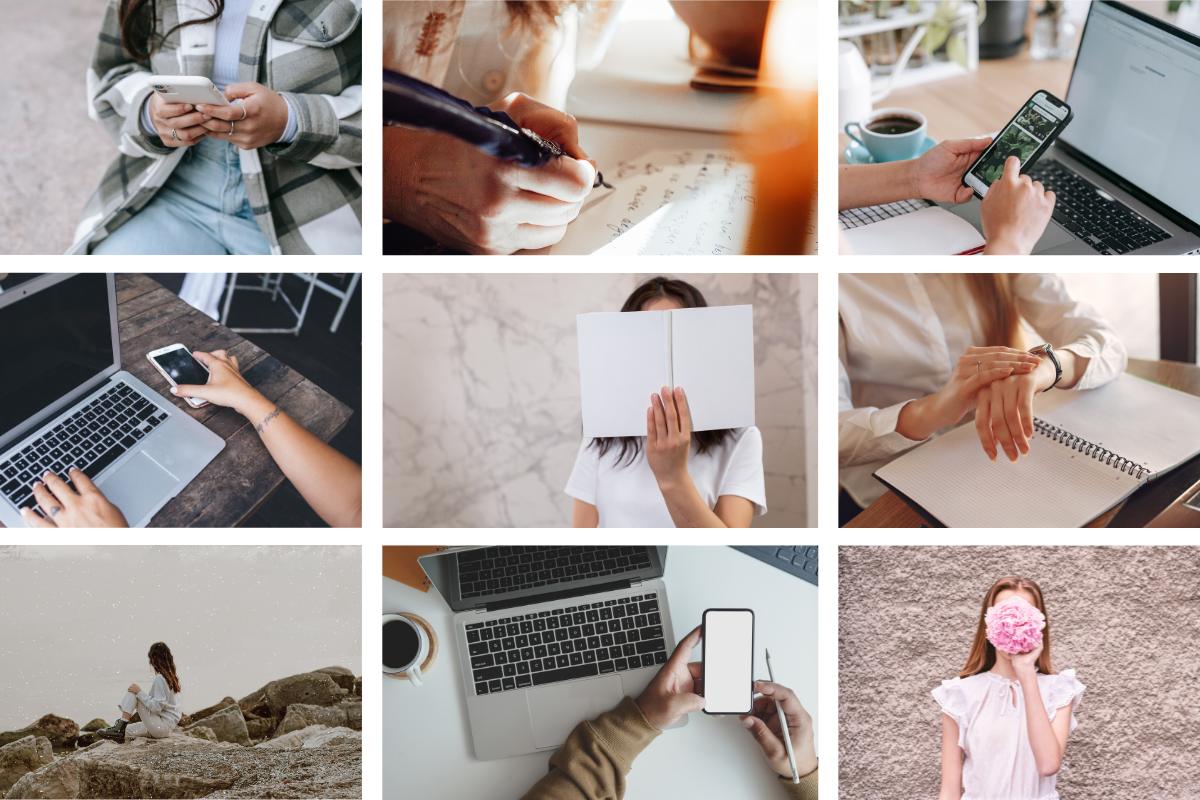
When I searched ‘faceless marketing’ on Canva for some images … here are just some of the hundreds of options it gave me.
What are faceless Instagram accounts?
Faceless Instagram accounts are accounts that create and share posts that don’t use the creator’s face at all. They might have their first name in their bio, but they won’t show their face. They use stock images, or images they’ve taken that don’t include any faces. You can learn more about it here and how do set one up if you’re interested.
Why do people start faceless social media accounts?
Of late, people start faceless social media accounts for several reasons:
- It’s easier and faster to create content if you’re not taking photos or videos of yourself
- There is a vast collection online of stock imagery
- They want to share but want to remain a bit under the radar for privacy
- You can experiment quite a lot with a faceless account – it doesn’t really come back to you if you get it really wrong
- Setting those boundaries between real life and your online life
- And there might be others, too.
But that’s just a start. But as you’ll see, the idea of faceless marketing is similar to that of anonymous blogging.
What is anonymous blogging?
Having an anonymous blog means you create and share content online in a blogging space but do not have your face shown anywhere. This has been around for years and years, and while there are degrees to it – perhaps you don’t show your face but you still show pictures of yourself, or maybe you share your name and all the things you get up to but not your face, or perhaps you create a completely new alias and write under a pseudonym – most of the time, no one knows who the writer is.

The Pros and Cons of Anonymous Blogging
My face is everywhere (as pictured above!). Sidebar, home page, footer, in posts, on pages, over on Learn: This Splendid Shambles … on Instagram, on Bold Beginner Bloggers, on The Blogging Room. I do not blog anonymously. Never have. People know who I am here on This Splendid Shambles, on social media, and definitely on platforms such as Pinterest. And very much my email list.
But I do get it, and I’ve known some people over the years who have blogged anonymously, or to some degree of privacy. I didn’t actually know what a now good friend of mine looked like for a long time, simply because she never showed her face on her blog. She was faceless blogging, essentially.
Like any form of … well, anything, there are pros and cons to faceless accounts, and it’s the same for blogging anonymously. And this might not be a be-all-and-end-all list, but it’s a start to get you thinking.
Cons of Anonymous Blogging
Like anything we do, there are often cons to it. And being an anonymous blogger has it’s cons. Perhaps more so than it’s pros, but we’ll get to those in a moment.
Lack of trust
One of the best things we can do as bloggers is connect with our audiences and build trust. Hopefully, you’re here reading this blog post because you recognise that I’ve been doing this blogging thing for over a decade, and you trust that I probably have some decent things to say by now (right? 👀). If you’ve just stumbled upon this blog post, then welcome! Take a look around, get to know me. The more we know people, even in an online sense, the more we trust them and are happy to take up some of their advice.
Lack of credibility
Similarly, with anonymous blogging, it’s hard to foster that sense of credibility. How do I know this anonymous blog online that I’ve found is actually giving me good information? How do I know that this person, this anonymous person somewhere in the world, knows what they know? While slapping a photo of your face online isn’t going to immediately make what you say credible, it is going to help. Sharing your story and who you are
Relatability
When I read people’s blogs, and see them struggling with something, or sharing something that they did, or laughing with someone about a story … there’s a relatability going on there. I can see what you’re going through and I say “oh, totally relatable!” It’s much harder to relate to someone when you don’t know what they look like, or who they are as a person, what makes them tick, where they’re at in their life stage etc. And if people aren’t connecting to your content as an anonymous blogger, then they might not be back.
Challenges to networking
Over the last 14 years or so, I’ve been able to attend so many amazing meet-ups, conferences, events and networking opportunities that I wouldn’t have had if I didn’t have a blog. Now, I’m not saying that if you have a faceless or anonymous blog you can’t go to these events – you can absolutely go! Connect, network, make friends.
But the challenge comes when you point people to your blog. If you’re blogging anonymously for privacy reasons, then you’re not going to get those opportunities to network. It’ll go against why you’re blogging anonymously in the first place. And collaborations become a bit of a challenge, as people are less likely to collab with your blog if they don’t know who you are.
Accountability
When I lived in England there was a group of us who went to a cafe each week at lunchtime to write. This was a wonderful wee accountability group, where we worked on our blogs or our writing pieces together. Now, I run The Blogging Room, a wonderful place for women to virtually come together over Zoom and Facebook and work on our blogs, grow our traffic, learn new skills and stay accountable. It’s much harder to do that if you have an anonymous blog.
It’s also much harder to seek help or encouragement or support when you’re not actually saying who you are, or you’re not joining groups, or making blogging friends.
Taking credit
I once had a dream that I found out who Banksy was. If you’re unfamiliar, the artist who goes by ‘Banksy’ is still anonymous. No one knows who they are, despite them being around and creating art for years and years. Or the poet Atticus: he’s published four books, all under the name ‘Atticus’ and we don’t actually know who he is. In their own way, they are seeing and taking credit for the art they’re creating, but under a pseudonym. But then again, I often wonder if they want to just announce their presence to the world sometime.
You might have started your anonymous blog because you want to write and share without anyone knowing it was you. But what if you do some incredible things? It’s good to be proud of what we accomplish, and proud of what we’re sharing. As an anonymous blogger, it’s difficult – but not impossible! As our artist buddies above are proof of, perhaps – to take credit for things that you do, write, and create. Perhaps not a huge con, but something to think about.
Pros of Anonymous Blogging
Like all cons lists, there are also pros to anonymous blogging. Let’s go through a couple now.
Privacy
Anonymous blogging means that you have a lot of privacy. If you’re not even sharing your name online, then, unless people are incredibly clever and can work it out (most people don’t have care or the energy to!), then people will literally not know who you are. And for many, that kind of freedom is … well, it’s freeing.
Creative freedom
Speaking of freedom, when you’re anonymous you can be really creative with what you’re doing, with little consequences (which might also be a con …). What I mean is that if you want to do something that you wouldn’t usually do in real life, or express yourself in a certain way, you can. I’m not saying you can’t when you have a known blog, but you do have that creative freedom to basically just YOLO and do what you want.
You can focus on your content
Without the need to share photos of yourself, or take the photos to begin with (or have them taken), or present any sort of front or ‘show up’, you can focus solely on greatly great content. Whether you’re sharing parts of life (anonymously), or you’re just creating posts about plants, or education, or books, or whatever it is … you can focus on that. You have more time, perhaps, to simply write and create blog posts without the need to deviate to other things.
At the end of the day …
So, there you have it! Faceless marketing might be trending now, but a form of it, anonymous blogging, has actually been around for ages. While both ways of creating content – faceless or anonymously – give you the opportunity to share and create without the pressure of putting your face out there, giving you tons of privacy and creative freedom … they also make things like building trust and forming those connections a bit tricky.
You can see that I’ve managed to come up with far more cons than pros to being an anonymous blogger, but at the end of the day, you have to decide what pros and cons outweigh the others, and whether you want to get into anonymous blogging or having a faceless account.
What do you reckon? I’d love to hear from you about this topic! Drop your thoughts into the comments!

Anjali Kay
Anjali Kay is an Aotearoa New Zealand-based blogger and book lover sharing travel inspiration, bookish posts, the occasional creative project, and a lot of practical blogging tips here at This Splendid Shambles. Based in Auckland, she's been writing book reviews and travel posts, sharing creative projects and blogging tips since she started her first blog in 2009. When she's not working on her own blog, Anjali also offers blog coaching and support for bloggers who want real guidance from someone who's actually done the work, and is a few chapters ahead of them.


Having fun? Check out these posts!

Grow Blog Traffic Without Working Your Butt Off

10 Things You Didn’t Know You Could Create in Canva
